How to get an engineer to talk on camera
Your most credible people are the ones who least want to be filmed. Eight field-tested questions, the prep that works, and the one thing that kills it every time.
You’ve booked the crew. The MD wants the ops director in the film, because the ops director is the person clients actually trust. The ops director would rather be on a turbine in January.
This is the most common standoff in energy content, and it matters more than it looks. Edelman and LinkedIn’s 2024 research found three in four B2B decision-makers trust expert voices over a supplier’s marketing. Your engineers are the marketing - the credible kind. The whole job is getting what’s in their head onto camera without the camera destroying it.
Here’s what a decade of filming operations people has taught us about how that actually works.
Why engineers freeze (it isn’t shyness)
The ops director who commands a control room and briefs the regulator without notes is not nervous by disposition. What the camera threatens is precision.
Engineers live in a culture where saying something slightly wrong has consequences, where colleagues will notice the loose figure, where “approximately” is a load-bearing word. A camera turns them into a spokesperson, and spokespeople get quoted. So they do the rational thing: they flatten everything into safe, pre-approved, dead language. The interview technically happens. Nothing usable gets said.
You don’t fix that with “just relax, be natural”. You fix it by removing the actual risk.
The prep that works
Don’t send questions in advance. This is the counterintuitive one. Send questions and a conscientious engineer will write answers, memorise them, and read them back to you off an internal autocue. You’ll get the précis of a good answer with all the life removed. Send themes instead: “we’ll talk about the grid connection, what nearly went wrong, and what you’d tell a new starter”. Enough to feel prepared, nothing to rehearse.
Give them the two safety guarantees, explicitly. First: you cannot fail this - if a sentence comes out wrong, we go again, and nobody ever sees the outtake. Second: nothing is published without your review and sign-off. Say both out loud before the camera rolls. Watch the shoulders drop. This isn’t a courtesy; it’s the mechanism that makes everything else possible.
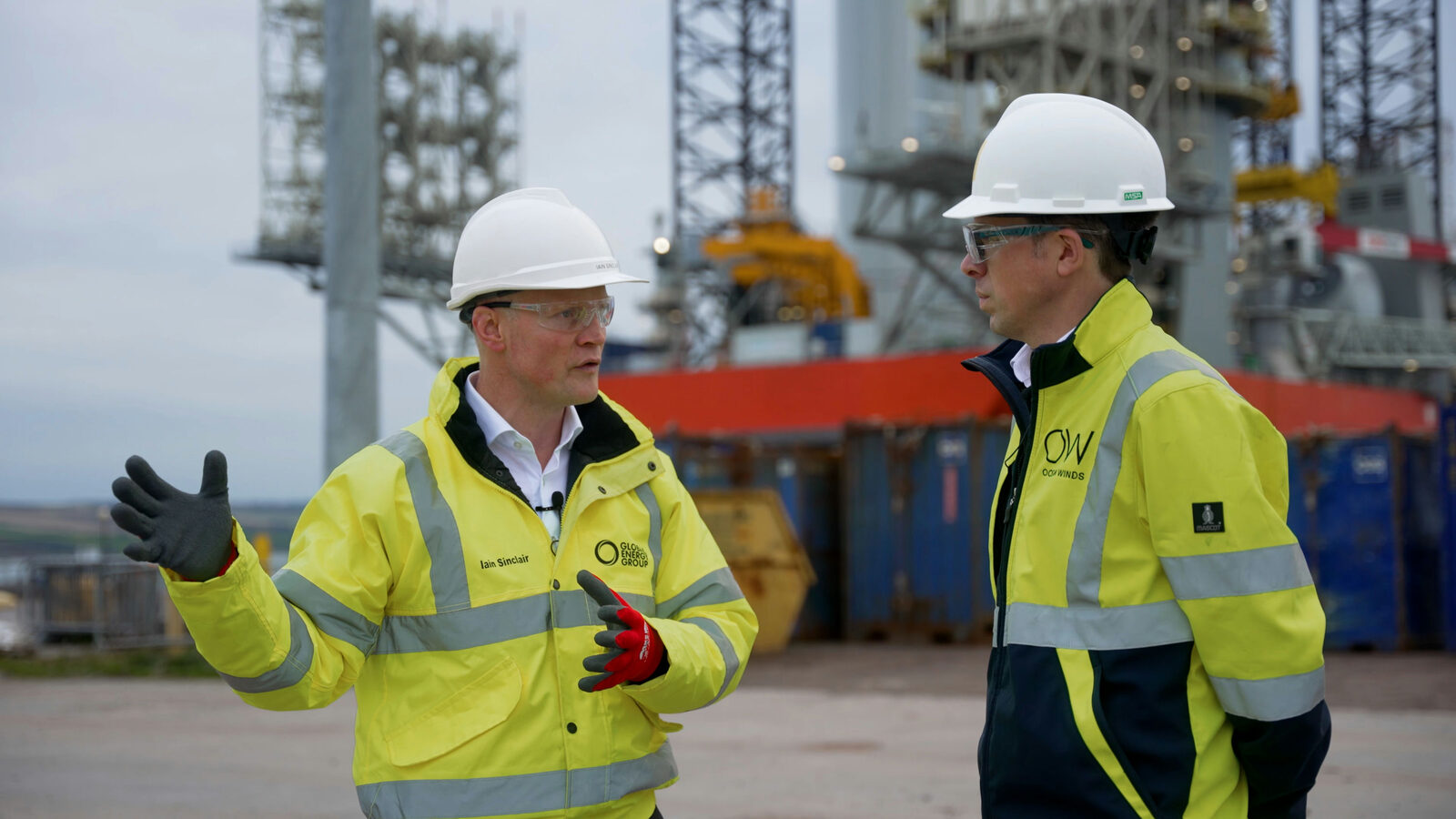
Shoot them where they’re competent. A control room, a quayside, next to the thing they built. Never a boardroom with a pot plant. People are fluent in their own territory and stilted everywhere else - the location does half the interviewing for you.
Eight questions that get something worth filming
The pattern behind all of them: ask for stories and specifics, never for statements. Past-tense and concrete beats present-tense and abstract, every time.
- “Walk me through the last time this nearly went wrong.” Near-misses produce the most honest, most watchable answers in the industry. Competence is most visible at its edges.
- “What do you check first when you arrive?” Ritual reveals expertise. The answer is always specific and always interesting.
- “What would surprise people about this job?” Permission to correct the outside world’s picture. Engineers take it eagerly.
- “Who taught you the thing you use most?” Gets you mentorship, heritage, and feeling - without ever asking anyone to be emotional.
- “Explain it like I’m a new starter on day one.” Kills jargon without saying “avoid jargon”. Their teaching voice is warmer than their briefing voice.
- “What does a good day look like out here?” Texture, pace, pride. B-roll directions hiding inside an answer.
- “What’s the bit nobody sees?” The invisible work is where the respect lives - theirs for the job, and the viewer’s for them.
- “What are you proudest of that never made it into a report?” Save it for last. By this point they’ll answer it properly, and it’s often the clip that leads the film.
Notice what’s missing: nothing here asks them to describe the company, praise the strategy, or sell. The moment a question smells like marketing, you’re back to the autocue in their head.
In the edit, and the one thing never to do
Cut their first two minutes - it’s warm-up, always. Cut anything they visibly performed. Keep the pauses; a person thinking before answering reads as exactly what it is, and audiences trust it.
And the one thing that undoes all of it: never hand them a script. The instant your most credible person reads marketing language from an autocue, you’ve spent your authenticity budget buying its opposite. If the words need to be exact - legal lines, safety statements - put them in graphics or narration, and let the humans stay human.
The fourth stage of the Restate Framework asks who tells the story. In energy the answer is nearly always the people who’d rather be on the turbine. Your job - or your agency’s - isn’t to make them sound like marketing. It’s to make sure marketing never makes them sound like it.